
Discover the ancient Chinese art of Feng Shui—a timeless practice that goes beyond furniture placement to create balance, harmony, and positive energy in your living space. Learn its core principles and how you can apply them today.
A serene traditional Chinese garden with flowing water, rocks, and lush plants, representing balanced Feng Shui.
For centuries, Feng Shui (风水, fēng shuǐ)—literally “wind and water”—has been an integral part of Chinese culture, architecture, and daily life. More than just an interior design trend, it is a profound philosophical system aimed at harmonizing individuals with their surrounding environment. By arranging spaces to allow the free flow of qi (life force energy), Feng Shui seeks to promote well-being, prosperity, and peace.
What is Feng Shui?
At its heart, Feng Shui is the art of placement. Rooted in Taoist philosophy and observations of nature, it operates on the belief that our environments deeply affect our health, fortune, and state of mind. Its principles were used to orient buildings—especially homes, tombs, and palaces—in auspicious locations to harness positive qi.
Core Principles of Feng Shui
The Concept of Qi (Chi): Qi is the invisible life force that flows through everything. Good Feng Shui allows qi to move smoothly and gently, like a meandering stream, rather than being stagnant or too rushed.
Yin and Yang: This represents the balance of opposite yet complementary forces—dark and light, soft and hard, passive and active. A balanced space should have a healthy interplay of both yin (calm, restful areas) and yang (active, energetic spaces).
The Five Elements (Wu Xing): Wood, Fire, Earth, Metal, and Water are the five fundamental phases of energy. They interact in cycles of creation and reduction. Incorporating a balanced representation of these elements in a space is key to creating harmony. For example, Wood (plants) feeds Fire (candles), and Water (a fountain) nourishes Wood.
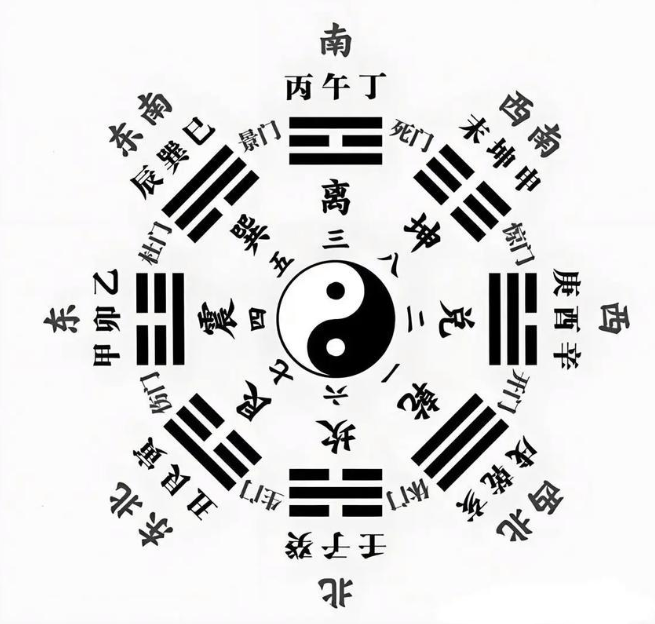
The Bagua Map: This is the essential Feng Shui energy map, an octagonal grid containing the symbols of the I Ching. When superimposed over a floor plan, it divides a space into nine areas, each corresponding to a specific life aspect—such as Career, Wealth, Relationships, and Health. The Bagua is used to diagnose and enhance different parts of your life through corresponding areas of your home.
Simple Feng Shui Tips for Your Home
You don’t need to remodel your house to apply basic Feng Shui. Start small:
Clear the Clutter: Stagnant energy loves clutter. Removing unnecessary items is the first and most powerful step to allowing fresh qi to flow.
A Welcoming Entrance: Your front door is the “mouth of qi.” Keep it clean, well-lit, and free of obstacles to invite positive energy inside.
Command Position: In key rooms like the bedroom and office, position your bed or desk so you can see the door without being directly in line with it. This provides a sense of security and command.
Incorporate Nature: Add plants (Wood element) for growth and vitality, or a small water feature (Water element) to attract abundance. Ensure all plants are healthy.
Balance the Elements: If a room feels too “fiery” (angry arguments), add the Water element (blue/black colors, wavy shapes) to calm it. If it feels stuck, introduce the Metal element (white colors, round shapes) for clarity.
Common Misconceptions
Feng Shui is not a religion. It’s a practice rooted in environmental psychology and aesthetics.
It’s not about rigid rules or superstitions. Modern Feng Shui adapts ancient wisdom to contemporary living spaces.
It’s not a magic cure-all. It’s a tool for creating supportive environments, but your own actions and intentions are paramount.
Conclusion: Harmony in Modern Life
Feng Shui teaches us to be mindful of our surroundings and to create intentional spaces that support our goals and nurture our spirits. By aligning our homes with these principles of balance and flow, we can create sanctuaries of tranquility and positivity in our often-chaotic modern world.
Whether you’re looking to boost your creativity, improve relationships, or simply create a more peaceful home, exploring Feng Shui offers a fascinating and rewarding journey into one of China’s most enduring cultural treasures.